Co-Production of Knowledge at Sumida Farm Trains a New Generation of Community-Engaged ScientistsMay 13, 2024A collaboration between the University of Hawai‘i (UH), Hawai‘i Sea Grant, and the fourth generation of Sumida farmers focuses on training a new generation of community-engaged scientists. A key partner is UHERO, an interdisciplinary research group that informs public policy across Hawai‘i. The overarching goal is to build a healthy, resilient, and sustainable agricultural community… Read More
Co-Production of Knowledge at Sumida Farm Trains a New Generation of Community-Engaged ScientistsMay 13, 2024A collaboration between the University of Hawai‘i (UH), Hawai‘i Sea Grant, and the fourth generation of Sumida farmers focuses on training a new generation of community-engaged scientists. A key partner is UHERO, an interdisciplinary research group that informs public policy across Hawai‘i. The overarching goal is to build a healthy, resilient, and sustainable agricultural community… Read More
Social, economic, and health impacts of the Red Hill fuel spill: preliminary survey resultsJanuary 18, 2024By Leah Bremer, Tara Sutton, Ruben Juarez, Nicole Siegal, Nathan DeMaagd *University of Hawaiʻi Economic Research Organization (UHERO), Water Resources Research Center (WRRC), Department of Geography and Environment, University of Hawaiʻi at Mānoa. BackgroundOn November 20, 2021 the Red Hill Bulk Fuel Storage Facility leaked approximately 19,000 gallons of jet fuel into the Pearl Harbor… Read More
Towards more equitable ecosystem investment programsDecember 19, 2023UHERO's Leah Bremer is lead author on Global Water Forum piece focused on improving equity and durability in ecosystem service incentive programs. https://www.globalwaterforum.org/2023/12/06/towards-more-equitable-ecosystem-investment-programs-adaptation-and-equity-are-central-to-the-design-and-functioning-of-successful-water-funds/ Read More
Ecological Economics and the Circular EconomyDecember 8, 2023By Kimberly Burnett, James Roumasset, and Christopher Wada The Circular Economy In 1969, Belgian industrial designers Paul Jorion and Jacques Braijt proposed the circular concept of manufacturing products from recycled materials as opposed to the “linear” concept of producing them from mined or harvested raw materials and discarding the corresponding waste (short history here). The… Read More
Reducing fire risk and restoring value to fallow agricultural landsOctober 23, 2023This blog was conceived via conversations among UHERO faculty and fellows from diverse backgrounds from environmental economics, ecosystem services, economic diversification, and fire and ecosystems. It is meant to stimulate conversation, research, and action towards pathways to address the critical problem of fire risk from unmanaged grasslands and opportunities to support more generative landscapes. We… Read More
Embedding local values in Payments for Ecosystem Services for transformative changeOctober 3, 2023Abstract: The potential for Payments for Ecosystem Services (PES) programs to integrate nature’s diverse values into decision-making, and thereby support broader transformative change, is of increasing research interest. We analyze published reviews and case studies of PES from the IPBES Values Assessment to evaluate 1) how diverse values were (or were not) articulated through PES… Read More
Sea level rise risk interactions with coastal property values: a case study of O‘ahu, Hawai‘iSeptember 14, 2023Abstract: Climate change-induced sea level rise (SLR) will affect a range of coastal assets and prompt difficult decisions about coastal land use across the world. Several recent studies find that current and projected SLR is associated with relatively lower property values. We contribute to this growing body of research with a case study of O‘ahu,… Read More
After the Maui wildfires: The road ahead.August 31, 2023By Steven Bond-Smith, Daniela Bond-Smith, Carl Bonham, Leah Bremer, Kim Burnett, Makena Coffman, Peter Fuleky, Byron Gangnes, Rachel Inafuku, Ruben Juarez, Sumner La Croix, Colin Moore, Dylan Moore, Nori Tarui, Justin Tyndall, and Chris Wada The immediate recovery efforts from the devastating Maui wildfires continue, and at UHERO we share our community’s anguish over the… Read More
Solving Optimal Groundwater Problems with ExcelAugust 16, 2023Abstract: Welfare maximizing management of coastal groundwater requires a sequence of pumping targets, typically terminating with a constant withdrawal rate in the long run. In contrast, managing according to sustainable yield at best identifies the constant rate of pumping in the long run. We illustrate an accessible solution method, using Excel Solver to find the… Read More
Effects of Multiple Drivers of Environmental Change on Native and Invasive Macroalgae in Nearshore Groundwater Dependent EcosystemsJuly 26, 2023New UHERO Environment and collaborator publication in Water Resources Research demonstrates the connections between forest management, groundwater pumping, climate change and nearshore groundwater dependent ecosystems in Kona, Hawaiʻi. Abstract: Groundwater dependent ecosystems (GDE) are increasingly recognized as critical components of sustainable groundwater management, but are threatened by multiple drivers of environmental change. Despite this importance,… Read More
Managing retreat for sandy beach areas under sea level riseJuly 24, 2023Abstract: Sea level rise (SLR) is projected to impact approximately one billion people by 2100. For many coastal communities, retreat is the most viable long-term option due to exposure risk under SLR and increased coastal hazards. Our research analyzes the costs of retreating coastal development at an iconic beach in Hawaiʻi that is experiencing severe… Read More
Frontiers in páramo water resources research: A multidisciplinary assessmentJune 11, 2023Abstract: Interdisciplinary knowledge is necessary to achieve sustainable management of natural resources. However, research is still often developed in an exclusively disciplinary manner, hampering the capacity to holistically address environmental issues. This study focuses on páramo, a group of high-elevation ecosystems situated around ∼3000 to ∼5000 m a.s.l. in the Andes from western Venezuela and… Read More

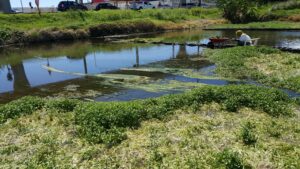 Co-Production of Knowledge at Sumida Farm Trains a New Generation of Community-Engaged Scientists May 13, 2024 A collaboration between the University of Hawai‘i (UH), Hawai‘i Sea Grant, and the fourth generation of Sumida farmers focuses on training a new generation of community-engaged scientists. A key partner is UHERO, an interdisciplinary research group that informs public policy across Hawai‘i. The overarching goal is to build a healthy, resilient, and sustainable agricultural community… Read More
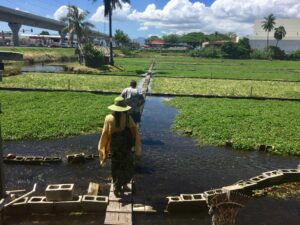 Co-Production of Knowledge at Sumida Farm Trains a New Generation of Community-Engaged Scientists May 13, 2024 A collaboration between the University of Hawai‘i (UH), Hawai‘i Sea Grant, and the fourth generation of Sumida farmers focuses on training a new generation of community-engaged scientists. A key partner is UHERO, an interdisciplinary research group that informs public policy across Hawai‘i. The overarching goal is to build a healthy, resilient, and sustainable agricultural community… Read More
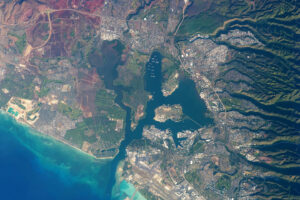 Social, economic, and health impacts of the Red Hill fuel spill: preliminary survey results January 18, 2024 By Leah Bremer, Tara Sutton, Ruben Juarez, Nicole Siegal, Nathan DeMaagd *University of Hawaiʻi Economic Research Organization (UHERO), Water Resources Research Center (WRRC), Department of Geography and Environment, University of Hawaiʻi at Mānoa. BackgroundOn November 20, 2021 the Red Hill Bulk Fuel Storage Facility leaked approximately 19,000 gallons of jet fuel into the Pearl Harbor… Read More
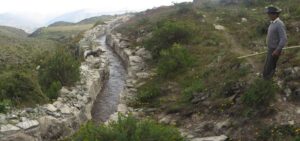 Towards more equitable ecosystem investment programs December 19, 2023 UHERO's Leah Bremer is lead author on Global Water Forum piece focused on improving equity and durability in ecosystem service incentive programs. https://www.globalwaterforum.org/2023/12/06/towards-more-equitable-ecosystem-investment-programs-adaptation-and-equity-are-central-to-the-design-and-functioning-of-successful-water-funds/ Read More
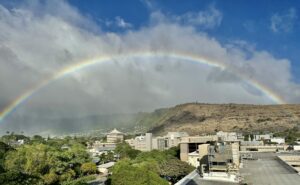 Ecological Economics and the Circular Economy December 8, 2023 By Kimberly Burnett, James Roumasset, and Christopher Wada The Circular Economy In 1969, Belgian industrial designers Paul Jorion and Jacques Braijt proposed the circular concept of manufacturing products from recycled materials as opposed to the “linear” concept of producing them from mined or harvested raw materials and discarding the corresponding waste (short history here). The… Read More
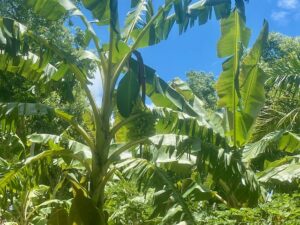 Reducing fire risk and restoring value to fallow agricultural lands October 23, 2023 This blog was conceived via conversations among UHERO faculty and fellows from diverse backgrounds from environmental economics, ecosystem services, economic diversification, and fire and ecosystems. It is meant to stimulate conversation, research, and action towards pathways to address the critical problem of fire risk from unmanaged grasslands and opportunities to support more generative landscapes. We… Read More
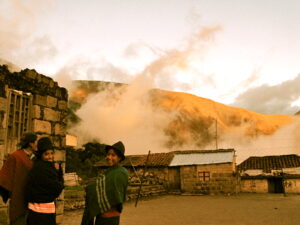 Embedding local values in Payments for Ecosystem Services for transformative change October 3, 2023 Abstract: The potential for Payments for Ecosystem Services (PES) programs to integrate nature’s diverse values into decision-making, and thereby support broader transformative change, is of increasing research interest. We analyze published reviews and case studies of PES from the IPBES Values Assessment to evaluate 1) how diverse values were (or were not) articulated through PES… Read More
 Sea level rise risk interactions with coastal property values: a case study of O‘ahu, Hawai‘i September 14, 2023 Abstract: Climate change-induced sea level rise (SLR) will affect a range of coastal assets and prompt difficult decisions about coastal land use across the world. Several recent studies find that current and projected SLR is associated with relatively lower property values. We contribute to this growing body of research with a case study of O‘ahu,… Read More
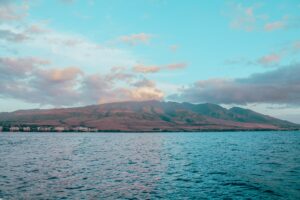 After the Maui wildfires: The road ahead. August 31, 2023 By Steven Bond-Smith, Daniela Bond-Smith, Carl Bonham, Leah Bremer, Kim Burnett, Makena Coffman, Peter Fuleky, Byron Gangnes, Rachel Inafuku, Ruben Juarez, Sumner La Croix, Colin Moore, Dylan Moore, Nori Tarui, Justin Tyndall, and Chris Wada The immediate recovery efforts from the devastating Maui wildfires continue, and at UHERO we share our community’s anguish over the… Read More
 Solving Optimal Groundwater Problems with Excel August 16, 2023 Abstract: Welfare maximizing management of coastal groundwater requires a sequence of pumping targets, typically terminating with a constant withdrawal rate in the long run. In contrast, managing according to sustainable yield at best identifies the constant rate of pumping in the long run. We illustrate an accessible solution method, using Excel Solver to find the… Read More
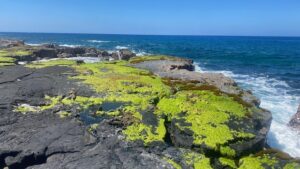 Linking climate, forests, and limu: Examining the influence of environmental change on groundwater dependent ecosystems in Kona July 26, 2023 By Leah Bremer, Brytne Okuhata, Jade Delevaux, Angela Richards Doná, Celia Smith, Veronica Gibson, Henrietta Dulai, Aly El Kadi, Kosta Stamoulis, Kimberly Burnett, Christopher Wada Summary: Climate change and increased groundwater pumping are likely to increase the habitat suitability of an invasive seaweed and decrease the abundance of a native and culturally important limu species… Read More
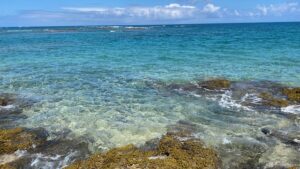 Effects of Multiple Drivers of Environmental Change on Native and Invasive Macroalgae in Nearshore Groundwater Dependent Ecosystems July 26, 2023 New UHERO Environment and collaborator publication in Water Resources Research demonstrates the connections between forest management, groundwater pumping, climate change and nearshore groundwater dependent ecosystems in Kona, Hawaiʻi. Abstract: Groundwater dependent ecosystems (GDE) are increasingly recognized as critical components of sustainable groundwater management, but are threatened by multiple drivers of environmental change. Despite this importance,… Read More
 Managing retreat for sandy beach areas under sea level rise July 24, 2023 Abstract: Sea level rise (SLR) is projected to impact approximately one billion people by 2100. For many coastal communities, retreat is the most viable long-term option due to exposure risk under SLR and increased coastal hazards. Our research analyzes the costs of retreating coastal development at an iconic beach in Hawaiʻi that is experiencing severe… Read More
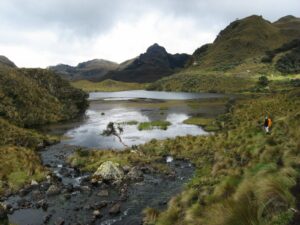 Frontiers in páramo water resources research: A multidisciplinary assessment June 11, 2023 Abstract: Interdisciplinary knowledge is necessary to achieve sustainable management of natural resources. However, research is still often developed in an exclusively disciplinary manner, hampering the capacity to holistically address environmental issues. This study focuses on páramo, a group of high-elevation ecosystems situated around ∼3000 to ∼5000 m a.s.l. in the Andes from western Venezuela and… Read More