A Proposal for Real-Time Pricing Tariffs for Large Electricity CustomersAugust 27, 2024As Oahu’s electric grid transitions to clean energy, characterized by variable wind, solar, and storage resources, the marginal cost of electricity will become increasingly variable across time and location. Consequently, the value of using locational marginal prices (LMP) for customer billing and compensating distributed generation will increase significantly. This report outlines a proposal to implement […]
Optimal transmission expansion minimally reduces decarbonization costs of U.S. electricityFebruary 21, 2024Solar and wind power are cost-competitive with fossil fuels, yet their intermittent nature presents challenges. Significant temporal and geographic differences in land, wind, and solar resources suggest that long-distance transmission could be particularly beneficial. Using a detailed, open source model, we analyze optimal transmission expansion jointly with storage, generation, and hourly operations across the three […]
Effects of alternative pricing structures on electricity consumption and payments in the commercial and industrial sectorNovember 28, 2023Abstract: We investigate the distributional and welfare impacts when commercial and industrial (C&I) electricity end users face a dynamic pricing structure as opposed to a constant volumetric price with demand charge on individual users’ peak usage. While demand charge does not necessarily reduce the system-wide peak, it often constitutes a large share of C&I users’ […]
Embracing TOU: Nudges, Rates, and Renewable EnergyAugust 21, 2023By Michael Roberts, Nori Tarui and Ethan Hartely Hawaiian Electric Company is about to embark on a significant experiment: a pilot program introducing time-of-use (TOU) pricing. Designed to reduce electricity prices during daylight hours when solar power is abundant and increase them during the evening when the sun sets and demand rises, this initiative could […]
A Comparison of State-Level Carbon Reduction Strategies: A Case Study of Hawai‘iMarch 16, 2023Abstract: State-level electricity standards are proliferating and becoming more ambitious, with numerous US states adopting a Renewable Portfolio Standard (RPS) and a small but increasing number of states participating in carbon pricing programs. The State of Hawai‘i has an ambitious RPS that requires 100% electricity generation through renewable sources by 2045. This study uses a […]
Real-Time Pricing and the Cost of Clean PowerAugust 9, 2022Solar and wind power are now cheaper than fossil fuels but are intermittent. The extra supply-side variability implies growing benefits of using real-time retail pricing (RTP). We evaluate the potential gains of RTP using a model that jointly solves investment, supply, storage, and demand to obtain a chronologically detailed dynamic equilibrium for the island of […]
Are We Building Too Much Natural Gas Pipeline? A comparison of actual US expansion of pipeline to an optimized plan of the interstate networkApril 25, 2022Interstate natural gas transmission and storage infrastructure is facilitated using regulated, private transactions. Pipeline companies obtain long-term contracts from producers and wholesale purchasers, typically local distribution companies (LDCs). Historically, the Federal Energy Regulatory Commission (FERC) accepted these counterparty contracts as sufficient justification of need. Typically the LDCs are themselves regulated firms, which sometimes possess affiliations […]
Economic and GHG impacts of a US state-level carbon tax: the case of Hawai’iApril 19, 2022A new paper by a team from UHERO published in Climate Policy finds that a carbon tax for Hawai‘i set at the federal social cost of carbon would reduce cumulative GHG emissions by 10% relative to the baseline from 2025 to 2045. They find that when carbon tax revenues are paid as equal-share dividends to Hawai‘i […]
Does air pollution increase electric vehicle adoption? Evidence from U.S. metropolitan areas, 2011–2018April 15, 2022A publication in the Journal of Environmental Economics and Policy by a team of economists including UHERO’s Coffman, Hayashida, and La Croix shows that changes in local air pollution within U.S. metropolitan areas are associated with changes in consumer purchases of new EVs. The authors find a positive association between PM2.5 pollution and BEV adoption, and a negative […]
What do families in Hawaiʻi use electricity for?September 29, 2021By Nori Tarui and Pratistha Gyawali CDA Project Dashboard IntroductionThe dashboard illustrates Hawaiʻi’s residential electricity usage based on the 2019 Residential Energy Use Survey, a residential appliance saturation survey conducted by Hawaiian Electric Company. UHERO applied the conditional demand analysis (CDA), which is a statistical method to estimate average annual consumption associated with each appliance […]
Using Temperature Sensitivity to Estimate Shiftable Electricity Demand Implications for power system investments and climate changeSeptember 2, 2021Growth of intermittent renewable energy and climate change make it increasingly difficult to manage electricity demand variability. Transmission and centralized storage technologies can help, but are costly. An alternative to centralized storage is to make better use of shiftable demand, but it is unclear how much shiftable demand exists. A significant share of electricity demand […]
The Effects of Utility Revenue Decoupling on Electricity PricesSeptember 1, 2021Revenue decoupling (RD) is a regulatory mechanism that allows adjustments of retail electricity rates for the regulated utility to recover its required revenue despite fluctuations in its sales volume. The U.S. utility data in 2000–2019 reveals that RD is associated with about a 4-percentage point higher growth rate of residential electricity prices within the first year after […]
Energy Economics: Lessons for and from the PhilippinesAugust 30, 2021By Jim Roumasset This is to share some recent energy research from the Philippines. Some of the findings have relevance for other small economies such as Hawaii. Green GDP and environmental taxationMany governments, including those in the Philippines and the U.S. declare that their mission is to promote the general welfare. It is well known […]
Are We Hitting Our Targets? A Look at Hawai‘i’s GHG EmissionsAugust 11, 2021By Makena Coffman, Maja Schjervheim, and Paul Bernstein Over the past three years, the State of Hawai‘i Department of Health has released a Hawai‘i Greenhouse Gas Emissions Report. This year’s report added an inventory for 2017, as well as projections through 2030 based on existing policies and trends. UHERO collaborated with ICF on this project and […]
Is a Carbon Tax Viable for a Small Island Economy?June 17, 2021By Maja Schjervheim, Paul Bernstein, Sumner La Croix, Makena Coffman, and Sherilyn Hayashida For the third year in a row, a carbon tax bill fizzled out at the Hawaiʻi State Legislature. Perhaps it was the difficult timing of introducing a new tax in the wake of a pandemic. Perhaps it was due to qualms regarding […]

 A Proposal for Real-Time Pricing Tariffs for Large Electricity Customers August 27, 2024 As Oahu’s electric grid transitions to clean energy, characterized by variable wind, solar, and storage resources, the marginal cost of electricity will become increasingly variable across time and location. Consequently, the value of using locational marginal prices (LMP) for customer billing and compensating distributed generation will increase significantly. This report outlines a proposal to implement […]
 Optimal transmission expansion minimally reduces decarbonization costs of U.S. electricity February 21, 2024 Solar and wind power are cost-competitive with fossil fuels, yet their intermittent nature presents challenges. Significant temporal and geographic differences in land, wind, and solar resources suggest that long-distance transmission could be particularly beneficial. Using a detailed, open source model, we analyze optimal transmission expansion jointly with storage, generation, and hourly operations across the three […]
 Effects of alternative pricing structures on electricity consumption and payments in the commercial and industrial sector November 28, 2023 Abstract: We investigate the distributional and welfare impacts when commercial and industrial (C&I) electricity end users face a dynamic pricing structure as opposed to a constant volumetric price with demand charge on individual users’ peak usage. While demand charge does not necessarily reduce the system-wide peak, it often constitutes a large share of C&I users’ […]
 Embracing TOU: Nudges, Rates, and Renewable Energy August 21, 2023 By Michael Roberts, Nori Tarui and Ethan Hartely Hawaiian Electric Company is about to embark on a significant experiment: a pilot program introducing time-of-use (TOU) pricing. Designed to reduce electricity prices during daylight hours when solar power is abundant and increase them during the evening when the sun sets and demand rises, this initiative could […]
 A Comparison of State-Level Carbon Reduction Strategies: A Case Study of Hawai‘i March 16, 2023 Abstract: State-level electricity standards are proliferating and becoming more ambitious, with numerous US states adopting a Renewable Portfolio Standard (RPS) and a small but increasing number of states participating in carbon pricing programs. The State of Hawai‘i has an ambitious RPS that requires 100% electricity generation through renewable sources by 2045. This study uses a […]
 Real-Time Pricing and the Cost of Clean Power August 9, 2022 Solar and wind power are now cheaper than fossil fuels but are intermittent. The extra supply-side variability implies growing benefits of using real-time retail pricing (RTP). We evaluate the potential gains of RTP using a model that jointly solves investment, supply, storage, and demand to obtain a chronologically detailed dynamic equilibrium for the island of […]
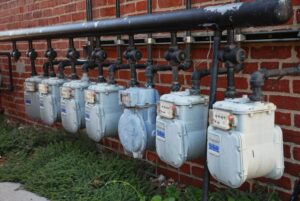 Are We Building Too Much Natural Gas Pipeline? A comparison of actual US expansion of pipeline to an optimized plan of the interstate network April 25, 2022 Interstate natural gas transmission and storage infrastructure is facilitated using regulated, private transactions. Pipeline companies obtain long-term contracts from producers and wholesale purchasers, typically local distribution companies (LDCs). Historically, the Federal Energy Regulatory Commission (FERC) accepted these counterparty contracts as sufficient justification of need. Typically the LDCs are themselves regulated firms, which sometimes possess affiliations […]
 Economic and GHG impacts of a US state-level carbon tax: the case of Hawai’i April 19, 2022 A new paper by a team from UHERO published in Climate Policy finds that a carbon tax for Hawai‘i set at the federal social cost of carbon would reduce cumulative GHG emissions by 10% relative to the baseline from 2025 to 2045. They find that when carbon tax revenues are paid as equal-share dividends to Hawai‘i […]
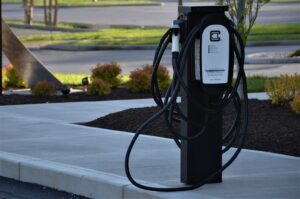 Does air pollution increase electric vehicle adoption? Evidence from U.S. metropolitan areas, 2011–2018 April 15, 2022 A publication in the Journal of Environmental Economics and Policy by a team of economists including UHERO’s Coffman, Hayashida, and La Croix shows that changes in local air pollution within U.S. metropolitan areas are associated with changes in consumer purchases of new EVs. The authors find a positive association between PM2.5 pollution and BEV adoption, and a negative […]
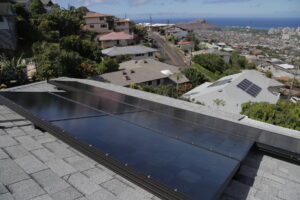 What do families in Hawaiʻi use electricity for? September 29, 2021 By Nori Tarui and Pratistha Gyawali CDA Project Dashboard IntroductionThe dashboard illustrates Hawaiʻi’s residential electricity usage based on the 2019 Residential Energy Use Survey, a residential appliance saturation survey conducted by Hawaiian Electric Company. UHERO applied the conditional demand analysis (CDA), which is a statistical method to estimate average annual consumption associated with each appliance […]
 Using Temperature Sensitivity to Estimate Shiftable Electricity Demand Implications for power system investments and climate change September 2, 2021 Growth of intermittent renewable energy and climate change make it increasingly difficult to manage electricity demand variability. Transmission and centralized storage technologies can help, but are costly. An alternative to centralized storage is to make better use of shiftable demand, but it is unclear how much shiftable demand exists. A significant share of electricity demand […]
 The Effects of Utility Revenue Decoupling on Electricity Prices September 1, 2021 Revenue decoupling (RD) is a regulatory mechanism that allows adjustments of retail electricity rates for the regulated utility to recover its required revenue despite fluctuations in its sales volume. The U.S. utility data in 2000–2019 reveals that RD is associated with about a 4-percentage point higher growth rate of residential electricity prices within the first year after […]
 Energy Economics: Lessons for and from the Philippines August 30, 2021 By Jim Roumasset This is to share some recent energy research from the Philippines. Some of the findings have relevance for other small economies such as Hawaii. Green GDP and environmental taxationMany governments, including those in the Philippines and the U.S. declare that their mission is to promote the general welfare. It is well known […]
 Are We Hitting Our Targets? A Look at Hawai‘i’s GHG Emissions August 11, 2021 By Makena Coffman, Maja Schjervheim, and Paul Bernstein Over the past three years, the State of Hawai‘i Department of Health has released a Hawai‘i Greenhouse Gas Emissions Report. This year’s report added an inventory for 2017, as well as projections through 2030 based on existing policies and trends. UHERO collaborated with ICF on this project and […]
 Is a Carbon Tax Viable for a Small Island Economy? June 17, 2021 By Maja Schjervheim, Paul Bernstein, Sumner La Croix, Makena Coffman, and Sherilyn Hayashida For the third year in a row, a carbon tax bill fizzled out at the Hawaiʻi State Legislature. Perhaps it was the difficult timing of introducing a new tax in the wake of a pandemic. Perhaps it was due to qualms regarding […]