Fifth time’s a charm!June 1, 2023By John Lynham PhD student Adrian Amaya and UHERO Research Fellow John Lynham recently started working on a new NSF-funded $1.6 million project entitled “Pathways and constraints to adaptation in coastal social-environmental systems”. The project is a collaborative research endeavor, both across institutions and academic disciplines: it brings together marine biologists, oceanographers, economists, anthropologists, and… Read More
Detecting religion from space: Nyepi Day in BaliNovember 1, 2021Daily changes in human activity are difficult to detect using nightlight imagery because many factors that influence nightlights are changing from night to night. We propose using a difference-in-differences methodology for detecting daily changes in human behavior using NASA's Black Marble product suite. We find that total top-of-atmosphere radiance on the Indonesian island of Bali decreases by… Read More
Impact of two of the world’s largest protected areas on longline fishery catch ratesNovember 1, 2020Two of the largest protected areas on earth are U.S. National Monuments in the Pacific Ocean. Numerous claims have been made about the impacts of these protected areas on the fishing industry, but there has been no ex post empirical evaluation of their effects. We use administrative data documenting individual fishing events to evaluate the economic impact of the expansion of… Read More
Communication, Expectations, and Trust: An Experiment with Three MediaOctober 28, 2020We studied how communication media affect trust game play. Three popular media were considered: traditional face-to-face, Facebook groups, and anonymous online chat. We considered post-communication changes in players’ expectations and preferences, and further analyzed the contents of group communications to understand the channels through which communication appears to improve trust and trustworthiness. For senders, the social,… Read More
Risk preferences after a typhoon: An artefactual field experiment with fishers in the PhilippinesAugust 1, 2020When are risk preferences stable and when do they change? In general, individual preferences tend to be consistent across time and space but extreme shocks, such as natural disasters, appear to change how people make economic decisions. We conduct an artefactual field experiment with fishers on a remote island in the Philippines and investigate the effect of… Read More
Coastal armoring and sinking property values: the case of seawalls in CaliforniaJune 4, 2020Rising sea levels necessitate careful consideration of different forms of coastal protection but cost-benefit analysis is limited when important non-market social costs have not been measured. Seawalls protect individual properties but can potentially impose negative externalities on neighboring properties via accelerated beach loss. We conduct a hedonic valuation of seawalls in two coastal California counties:… Read More
Can demand-side management replicate a size limit in a small-scale fishery?March 1, 2020We tested whether it is possible to replicate the effects of a size limit with a voluntary mechanism – a price premium for larger fish. We randomly offered fishers in Indonesia a bonus for catching certain species of fish above certain sizes. We observe clear differences in catch as a result. Instead of inducing fishers to… Read More
Opportunities for agent-based modelling in human dimensions of fisheriesFebruary 28, 2020Models of human dimensions of fisheries are important to understanding and predicting how fishing industries respond to changes in marine ecosystems and management institutions. Advances in computation have made it possible to construct agent-based models (ABMs)—which explicitly describe the behaviour of individual people, firms or vessels in order to understand and predict their aggregate behaviours. ABMs are… Read More
Environmental market design for large-scale marine conservationJanuary 6, 2020It is commonly agreed that marine conservation should expand considerably around the world. However, most countries have not yet implemented large-scale no-take Marine Protected Areas (MPAs). When a country closes a large fraction of its waters to fishing, it stands to lose a considerable level of fishery revenue. Although biodiversity and spillover fishing benefits may far exceed… Read More
Broad threat to humanity from cumulative climate hazards intensified by greenhouse gas emissionsNovember 19, 2018The ongoing emission of greenhouse gases (GHGs) is triggering changes in many climate hazards that can impact humanity. We found traceable evidence for 467 pathways by which human health, water, food, economy, infrastructure and security have been recently impacted by climate hazards such as warming, heatwaves, precipitation, drought, floods, fires, storms, sea-level rise and changes in natural… Read More
Vog: Using Volcanic Eruptions to Estimate the Health Costs of ParticulateAugust 20, 2018By Tim Halliday, John Lynham, and Aureo de Paula Since its inception, the Environmental Protection Agency (EPA) in the United States has proven itself to be effective at reducing air pollution. For the six ‘criteria’ pollutants that the EPA is mandated to regulate, emissions of all six have declined substantially. Particulates have declined by 38%… Read More
Does the paradox of plenty exist? Experimental evidence on the curse of resource abundanceJune 1, 2018There is conflicting evidence about whether abundant resources are indeed a blessing or a curse. We make use of specially designed economic experiments to investigate how resource abundance affects cooperation in the absence or presence of regulatory institutions. We observe that in the absence of regulatory institutions, there is less cooperation in groups with access to… Read More
Rapid and lasting gains from solving illegal fishingMarch 19, 2018Perhaps the greatest challenge facing global fisheries is that recovery often requires substantial short-term reductions in fishing effort, catches and profits. These costs can be onerous and are borne in the present; thus, many countries are unwilling to undertake such socially and politically unpopular actions. We argue that many nations can recover their fisheries while avoiding these… Read More
Does the Allocation of Property Rights Matter in the Commons?January 1, 2018A popular solution to the Tragedy of the Commons is to create private property rights to access the commons. If resource users care about equity, they may be unwilling to respect property rights regimes that lead to less equitable outcomes. We explore in a series of laboratory experiments whether it is possible to undermine the efficiency of property rights… Read More

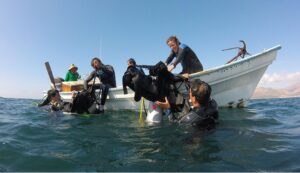 Fifth time’s a charm! June 1, 2023 By John Lynham PhD student Adrian Amaya and UHERO Research Fellow John Lynham recently started working on a new NSF-funded $1.6 million project entitled “Pathways and constraints to adaptation in coastal social-environmental systems”. The project is a collaborative research endeavor, both across institutions and academic disciplines: it brings together marine biologists, oceanographers, economists, anthropologists, and… Read More
 Detecting religion from space: Nyepi Day in Bali November 1, 2021 Daily changes in human activity are difficult to detect using nightlight imagery because many factors that influence nightlights are changing from night to night. We propose using a difference-in-differences methodology for detecting daily changes in human behavior using NASA's Black Marble product suite. We find that total top-of-atmosphere radiance on the Indonesian island of Bali decreases by… Read More
 Importance of equitable cost sharing in the Convention on Biological Diversity’s protected area agenda July 21, 2021 Principles from social equity literature can be applied to a cost-sharing framework in the CBD's new protected area strategy. Access Publication Read More
 Impact of two of the world’s largest protected areas on longline fishery catch rates November 1, 2020 Two of the largest protected areas on earth are U.S. National Monuments in the Pacific Ocean. Numerous claims have been made about the impacts of these protected areas on the fishing industry, but there has been no ex post empirical evaluation of their effects. We use administrative data documenting individual fishing events to evaluate the economic impact of the expansion of… Read More
 Communication, Expectations, and Trust: An Experiment with Three Media October 28, 2020 We studied how communication media affect trust game play. Three popular media were considered: traditional face-to-face, Facebook groups, and anonymous online chat. We considered post-communication changes in players’ expectations and preferences, and further analyzed the contents of group communications to understand the channels through which communication appears to improve trust and trustworthiness. For senders, the social,… Read More
 Risk preferences after a typhoon: An artefactual field experiment with fishers in the Philippines August 1, 2020 When are risk preferences stable and when do they change? In general, individual preferences tend to be consistent across time and space but extreme shocks, such as natural disasters, appear to change how people make economic decisions. We conduct an artefactual field experiment with fishers on a remote island in the Philippines and investigate the effect of… Read More
 Coastal armoring and sinking property values: the case of seawalls in California June 4, 2020 Rising sea levels necessitate careful consideration of different forms of coastal protection but cost-benefit analysis is limited when important non-market social costs have not been measured. Seawalls protect individual properties but can potentially impose negative externalities on neighboring properties via accelerated beach loss. We conduct a hedonic valuation of seawalls in two coastal California counties:… Read More
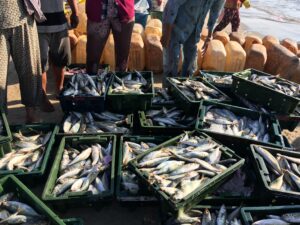 Can demand-side management replicate a size limit in a small-scale fishery? March 1, 2020 We tested whether it is possible to replicate the effects of a size limit with a voluntary mechanism – a price premium for larger fish. We randomly offered fishers in Indonesia a bonus for catching certain species of fish above certain sizes. We observe clear differences in catch as a result. Instead of inducing fishers to… Read More
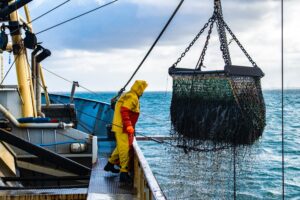 Opportunities for agent-based modelling in human dimensions of fisheries February 28, 2020 Models of human dimensions of fisheries are important to understanding and predicting how fishing industries respond to changes in marine ecosystems and management institutions. Advances in computation have made it possible to construct agent-based models (ABMs)—which explicitly describe the behaviour of individual people, firms or vessels in order to understand and predict their aggregate behaviours. ABMs are… Read More
 Environmental market design for large-scale marine conservation January 6, 2020 It is commonly agreed that marine conservation should expand considerably around the world. However, most countries have not yet implemented large-scale no-take Marine Protected Areas (MPAs). When a country closes a large fraction of its waters to fishing, it stands to lose a considerable level of fishery revenue. Although biodiversity and spillover fishing benefits may far exceed… Read More
 Broad threat to humanity from cumulative climate hazards intensified by greenhouse gas emissions November 19, 2018 The ongoing emission of greenhouse gases (GHGs) is triggering changes in many climate hazards that can impact humanity. We found traceable evidence for 467 pathways by which human health, water, food, economy, infrastructure and security have been recently impacted by climate hazards such as warming, heatwaves, precipitation, drought, floods, fires, storms, sea-level rise and changes in natural… Read More
 Vog: Using Volcanic Eruptions to Estimate the Health Costs of Particulate August 20, 2018 By Tim Halliday, John Lynham, and Aureo de Paula Since its inception, the Environmental Protection Agency (EPA) in the United States has proven itself to be effective at reducing air pollution. For the six ‘criteria’ pollutants that the EPA is mandated to regulate, emissions of all six have declined substantially. Particulates have declined by 38%… Read More
 Does the paradox of plenty exist? Experimental evidence on the curse of resource abundance June 1, 2018 There is conflicting evidence about whether abundant resources are indeed a blessing or a curse. We make use of specially designed economic experiments to investigate how resource abundance affects cooperation in the absence or presence of regulatory institutions. We observe that in the absence of regulatory institutions, there is less cooperation in groups with access to… Read More
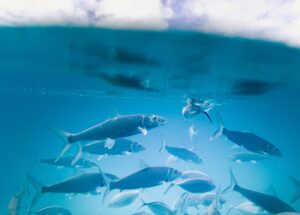 Rapid and lasting gains from solving illegal fishing March 19, 2018 Perhaps the greatest challenge facing global fisheries is that recovery often requires substantial short-term reductions in fishing effort, catches and profits. These costs can be onerous and are borne in the present; thus, many countries are unwilling to undertake such socially and politically unpopular actions. We argue that many nations can recover their fisheries while avoiding these… Read More
 Does the Allocation of Property Rights Matter in the Commons? January 1, 2018 A popular solution to the Tragedy of the Commons is to create private property rights to access the commons. If resource users care about equity, they may be unwilling to respect property rights regimes that lead to less equitable outcomes. We explore in a series of laboratory experiments whether it is possible to undermine the efficiency of property rights… Read More