
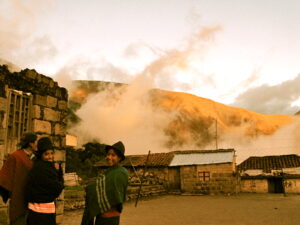
Embedding local values in Payments for Ecosystem Services for transformative change
Abstract: The potential for Payments for Ecosystem Services (PES) programs to integrate nature’s diverse values into decision-making, and thereby support broader transformative change, is of

Sea level rise risk interactions with coastal property values: a case study of O‘ahu, Hawai‘i
Abstract: Climate change-induced sea level rise (SLR) will affect a range of coastal assets and prompt difficult decisions about coastal land use across the world.
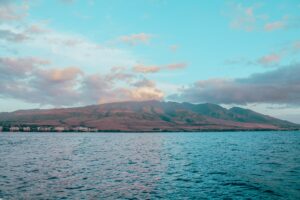
After the Maui wildfires: The road ahead.
By Steven Bond-Smith, Daniela Bond-Smith, Carl Bonham, Leah Bremer, Kim Burnett, Makena Coffman, Peter Fuleky, Byron Gangnes, Rachel Inafuku, Ruben Juarez, Sumner La Croix, Colin
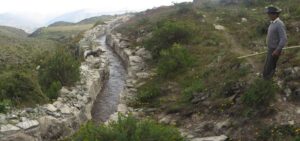
Toward more equitable ecosystem investment programs—Adaptation and equity are central to the design and functioning of successful water funds
Abstract: Projects designed to incentivize ecosystem management for societal benefits are becoming increasingly popular and are often touted as win–win solutions for social and environmental

Solving Optimal Groundwater Problems with Excel
Abstract: Welfare maximizing management of coastal groundwater requires a sequence of pumping targets, typically terminating with a constant withdrawal rate in the long run. In
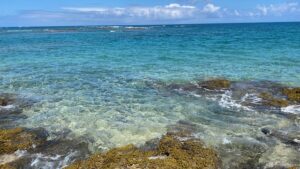
Effects of Multiple Drivers of Environmental Change on Native and Invasive Macroalgae in Nearshore Groundwater Dependent Ecosystems
New UHERO Environment and collaborator publication in Water Resources Research demonstrates the connections between forest management, groundwater pumping, climate change and nearshore groundwater dependent ecosystems

Managing retreat for sandy beach areas under sea level rise
Abstract: Sea level rise (SLR) is projected to impact approximately one billion people by 2100. For many coastal communities, retreat is the most viable long-term
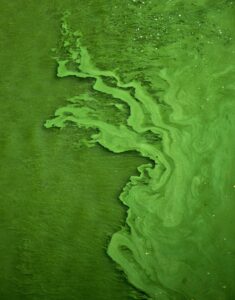
Effects of Multiple Drivers of Environmental Change on Native and Invasive Macroalgae in Nearshore Groundwater Dependent Ecosystems
Abstract: Groundwater dependent ecosystems (GDE) are increasingly recognized as critical components of sustainable groundwater management, but are threatened by multiple drivers of environmental change. Despite
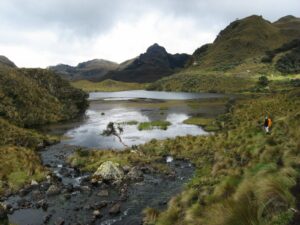
Frontiers in páramo water resources research: A multidisciplinary assessment
Abstract: Interdisciplinary knowledge is necessary to achieve sustainable management of natural resources. However, research is still often developed in an exclusively disciplinary manner, hampering the

What’s a (Better) Beach Day Worth? Economic Valuation of Changes in Waikīkī Beach Characteristics
Abstract: Whether beach nourishment, an established beach management measure, is justified depends on its benefits and costs. We apply a discrete choice experiment at Waikīkī
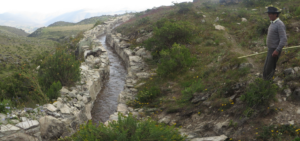
Investing in nature-based solutions: Cost profiles of collective-action watershed investment programs
Abstract: Worldwide, an increasing number of watershed management programs invest in nature-based solutions (NbS) to water security challenges. Yet, NbS for water security currently are
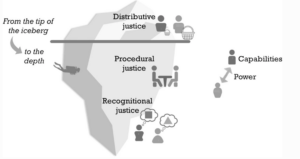
An environmental justice perspective on ecosystem services
UHERO Environment is part of an international collaboration focused on addressing environmental justice in ecosystem services research and practice. Their new publication in Ambio, “An

Non-native fallows hold high potential for restoration through agroforestry in a Pacific Island ecosystem
Abstract: Agricultural land abandonment affects millions of hectares of cultivated lands globally. While ending cultivation can lead to spontaneous reforestation and ecological benefits, the resulting
Tourism water use during the COVID-19 shutdown: A natural experiment in Hawai‘i
Abstract: Many popular tourist destinations are on small islands whose resources are in limited supply, and the effects of climate change and burgeoning tourism tend
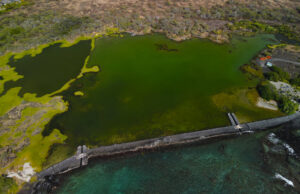
Biocultural values of groundwater dependent ecosystems in Kona, Hawaiʻi
New UHERO Environmental Policy and Planning Group study, led by UHERO/WRRC/Botany graduate student Veronica Gibson, illuminates social and cultural values of groundwater dependent ecosystems in