Male-biased sex ratios, marriage, and household composition in early twentieth-century Hawai‘iJanuary 31, 2024Abstract: Immigration to Hawai‘i between 1870 and 1930 led to a more than six-fold increase in population and high and rapidly varying sex ratios in the Chinese, Japanese, Korean, Filipino, and Caucasian populations of marriageable age. Using complete populations of the 1910, 1920, and 1930 Territorial Censuses of Hawai‘i, we estimate how male-biased ethnic sex… Read More
New publication by Timothy Halliday and Sumner La Croix in the Asia-Pacific Economic History ReviewJanuary 31, 2024In a new publication in the Asia-Pacific Economic History Review, Timothy Halliday and Sumner La Croix examine how male-biased ethnic sex ratios affected choices of second-generation men and women of marriageable age as a result of immigration to Hawaii between the late 19th and early 20th centuries. https://doi.org/10.1111/aehr.12280 Read More
Why College Is Worth the Investment: Estimating the Returns to a College Degree from the University of Hawai`i systemJanuary 16, 2024By Tim Halliday and Rachel Inafuku Read the full report. Across the nation, the cost of higher education has significantly increased over the past 20 years [1]. The surge in tuition prompted the Biden Administration's plan to forgive $39 billion in student loan debt for approximately 800,000 borrowers. The ongoing concerns regarding college affordability have… Read More
Estimating the Returns to Higher Education Using Administrative Data: A Case Study of the University of Hawai`i SystemJanuary 16, 2024Read the summary blog post. What is the value of a degree from the University of Hawai`i (UH)? While college tuition has significantly increasednationally, tuition within the UH system has become more affordable over the last ten years when adjusted for inflation. Despite this improved affordability, college enrollment rates among Hawai‘i’s public school graduates have… Read More
The intergenerational transmission of mental and physical health in the United KingdomOctober 13, 2023Abstract: As health is increasingly recognized as a key component of human welfare, a new line of research on intergenerational mobility has emerged that focuses on broad measures of health. We extend this research to consider two key components of health: physical health and mental health. We use rich survey data from the United Kingdom linking the… Read More
Replacing Medicaid with an Imperfect Substitute: Implications for Health InequalityAugust 16, 2023Abstract: A 2015 policy change substantially increased the administrative burden involved in accessing health insurance for Pacific Islander immigrants in Hawaii. We examine the heterogeneous health-care use effects of this policy, which revoked Medicaid eligibility for these migrants and replaced it with access to subsidized private health insurance. Using data on the universe of hospitalizations… Read More
Public Health Report: Vaccination Booster Uptake Lags as COVID Impact Reach WidensJanuary 5, 2023As we enter a new phase of the pandemic, Hawai‘i’s populations are becoming more confident that the worst of the pandemic is behind us, driving COVID-19 booster uptake down. However, significant impacts exacerbated by the pandemic, including long COVID, mental health issues, and the negative effects of long COVID on unemployment pose significant challenges that warrant… Read More
VOG – Using Volcanic Eruptions to Estimate the Impact of Pollutants on Learning OutcomesDecember 3, 2022By Rachel Inafuku. Joint research with Tim Halliday, Lester Lusher and Aureo de Paula. Introduction While an extensive number of studies have shown that pollution is detrimental to human health, a smaller, growing body of literature has found that pollution also negatively impacts cognitive performance. Research has shown that increases in pollutants lead to decreased… Read More
VOG: Using Volcanic Eruptions to Estimate the Impact of Air Pollution on Student Learning OutcomesNovember 1, 2022This study pairs variation stemming from volcanic eruptions from Kilauea with the census of Hawai‘i’s public schools student test scores to estimate the impact of particulates and sulfur dioxide on student performance. We leverage spatial correlations in pollution in conjunction with proximity to Kilauea and wind direction to construct predictions of pollution exposure at each… Read More
New publication in Journal of General Internal MedicineJune 16, 2022A new publication led by UHERO’s Tim Halliday and Ruben Juarez describes how the federal government’s response to the COVID-19 pandemic created a perfect storm in which private laboratories can earn huge profits from PCR testing while potentially impacting health care premium costs. View Publication Halliday, T., Tan, C., Juarez, R. et al. Financial Implications of COVID-19 Polymerase Chain Reaction… Read More
Financial Implications of COVID-19 Polymerase Chain Reaction Tests on Independent LaboratoriesJune 9, 2022During the COVID-19 pandemic, independent laboratories provided critically needed polymerase chain reaction (PCR) tests (Current Procedure Terminology Code: 87635) to identify positive COVID-19 patients. The Families First and Coronavirus Relief Act and CARES Act require commercial insurance plans to cover COVID-19 testing costs without any cost-sharing for patients, but do not set the price.1,2 Prior… Read More
Compact for care: how the Affordable Care Act marketplaces fell short for a vulnerable population in HawaiiNovember 8, 2021The Patient Protection and Affordable Care Act (ACA) was passed in 2010 to expand access to health insurance in the USA and promote innovation in health care delivery. While the law significantly reduced the proportion of uninsured, the market-based protection it provides for poor and vulnerable US residents is an imperfect substitute for government programs such… Read More
Intra-familial transfers, son preference, and retirement behavior in South KoreaOctober 1, 2021Abstract: We consider the nexus of intra-familial transfers, the sex composition of the sibship, and parental retirement behavior in South Korea. To investigate this, we employ the Korean Longitudinal Study of Aging and a research design that relies on plausibly exogenous variation in the sex composition of the sibship. We provide evidence that it costs… Read More
Expanding Health Insurance for the Elderly of the PhilippinesSeptember 15, 2021Abstract: This paper evaluates a Filipino policy that expanded health insurance coverage of its senior citizens, aged 60 and older, in 2014. We employ an instrumental variables estimator in which the first stage is a difference-in-differences specification that exploits the age discontinuity at age 60, along with data from before and after the policy. First stage… Read More
The Economics of Health and MigrationAugust 31, 2021Abstract: Migration and health are intimately connected. It is known that migrants tend to be healthier than non-migrants. However, the mechanisms for this association are elusive. On the one hand, the costs of migration are lower for healthier people, thereby making it easier for the healthy to migrate. Empirical evidence from a variety of contexts shows… Read More

 Male-biased sex ratios, marriage, and household composition in early twentieth-century Hawai‘i January 31, 2024 Abstract: Immigration to Hawai‘i between 1870 and 1930 led to a more than six-fold increase in population and high and rapidly varying sex ratios in the Chinese, Japanese, Korean, Filipino, and Caucasian populations of marriageable age. Using complete populations of the 1910, 1920, and 1930 Territorial Censuses of Hawai‘i, we estimate how male-biased ethnic sex… Read More
 Why College Is Worth the Investment: Estimating the Returns to a College Degree from the University of Hawai`i system January 16, 2024 By Tim Halliday and Rachel Inafuku Read the full report. Across the nation, the cost of higher education has significantly increased over the past 20 years [1]. The surge in tuition prompted the Biden Administration's plan to forgive $39 billion in student loan debt for approximately 800,000 borrowers. The ongoing concerns regarding college affordability have… Read More
 The intergenerational transmission of mental and physical health in the United Kingdom October 13, 2023 Abstract: As health is increasingly recognized as a key component of human welfare, a new line of research on intergenerational mobility has emerged that focuses on broad measures of health. We extend this research to consider two key components of health: physical health and mental health. We use rich survey data from the United Kingdom linking the… Read More
 Replacing Medicaid with an Imperfect Substitute: Implications for Health Inequality August 16, 2023 Abstract: A 2015 policy change substantially increased the administrative burden involved in accessing health insurance for Pacific Islander immigrants in Hawaii. We examine the heterogeneous health-care use effects of this policy, which revoked Medicaid eligibility for these migrants and replaced it with access to subsidized private health insurance. Using data on the universe of hospitalizations… Read More
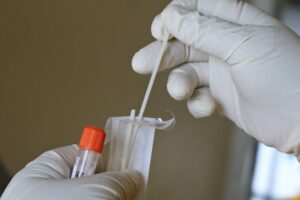 Public Health Report: Vaccination Booster Uptake Lags as COVID Impact Reach Widens January 5, 2023 As we enter a new phase of the pandemic, Hawai‘i’s populations are becoming more confident that the worst of the pandemic is behind us, driving COVID-19 booster uptake down. However, significant impacts exacerbated by the pandemic, including long COVID, mental health issues, and the negative effects of long COVID on unemployment pose significant challenges that warrant… Read More
 VOG – Using Volcanic Eruptions to Estimate the Impact of Pollutants on Learning Outcomes December 3, 2022 By Rachel Inafuku. Joint research with Tim Halliday, Lester Lusher and Aureo de Paula. Introduction While an extensive number of studies have shown that pollution is detrimental to human health, a smaller, growing body of literature has found that pollution also negatively impacts cognitive performance. Research has shown that increases in pollutants lead to decreased… Read More
 VOG: Using Volcanic Eruptions to Estimate the Impact of Air Pollution on Student Learning Outcomes November 1, 2022 This study pairs variation stemming from volcanic eruptions from Kilauea with the census of Hawai‘i’s public schools student test scores to estimate the impact of particulates and sulfur dioxide on student performance. We leverage spatial correlations in pollution in conjunction with proximity to Kilauea and wind direction to construct predictions of pollution exposure at each… Read More
 Compact for care: how the Affordable Care Act marketplaces fell short for a vulnerable population in Hawaii November 8, 2021 The Patient Protection and Affordable Care Act (ACA) was passed in 2010 to expand access to health insurance in the USA and promote innovation in health care delivery. While the law significantly reduced the proportion of uninsured, the market-based protection it provides for poor and vulnerable US residents is an imperfect substitute for government programs such… Read More
 Intra-familial transfers, son preference, and retirement behavior in South Korea October 1, 2021 Abstract: We consider the nexus of intra-familial transfers, the sex composition of the sibship, and parental retirement behavior in South Korea. To investigate this, we employ the Korean Longitudinal Study of Aging and a research design that relies on plausibly exogenous variation in the sex composition of the sibship. We provide evidence that it costs… Read More
 Expanding Health Insurance for the Elderly of the Philippines September 15, 2021 Abstract: This paper evaluates a Filipino policy that expanded health insurance coverage of its senior citizens, aged 60 and older, in 2014. We employ an instrumental variables estimator in which the first stage is a difference-in-differences specification that exploits the age discontinuity at age 60, along with data from before and after the policy. First stage… Read More
 The Economics of Health and Migration August 31, 2021 Abstract: Migration and health are intimately connected. It is known that migrants tend to be healthier than non-migrants. However, the mechanisms for this association are elusive. On the one hand, the costs of migration are lower for healthier people, thereby making it easier for the healthy to migrate. Empirical evidence from a variety of contexts shows… Read More