
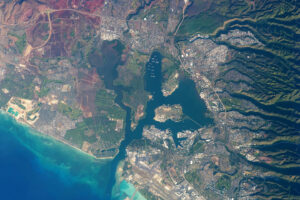
Social, economic, and health impacts of the Red Hill fuel spill: preliminary survey results
By Leah Bremer, Tara Sutton, Ruben Juarez, Nicole Siegal, Nathan DeMaagd *University of Hawaiʻi Economic Research Organization (UHERO), Water Resources Research Center (WRRC), Department of
Ecological Economics and the Circular Economy
By Kimberly Burnett, James Roumasset, and Christopher Wada The Circular Economy In 1969, Belgian industrial designers Paul Jorion and Jacques Braijt proposed the circular concept
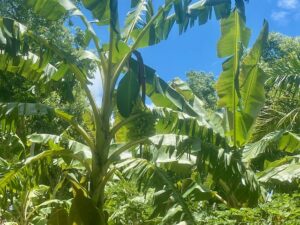
Reducing fire risk and restoring value to fallow agricultural lands
This blog was conceived via conversations among UHERO faculty and fellows from diverse backgrounds from environmental economics, ecosystem services, economic diversification, and fire and ecosystems.
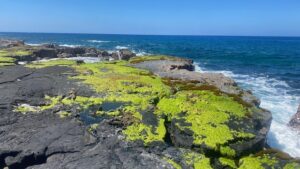
Linking climate, forests, and limu: Examining the influence of environmental change on groundwater dependent ecosystems in Kona
By Leah Bremer, Brytne Okuhata, Jade Delevaux, Angela Richards Doná, Celia Smith, Veronica Gibson, Henrietta Dulai, Aly El Kadi, Kosta Stamoulis, Kimberly Burnett, Christopher Wada
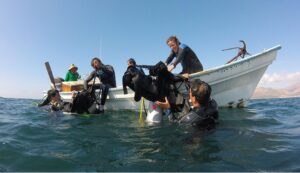
Fifth time’s a charm!
By John Lynham PhD student Adrian Amaya and UHERO Research Fellow John Lynham recently started working on a new NSF-funded $1.6 million project entitled “Pathways
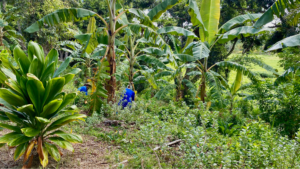
Puʻulani: Biocultural restoration of agroforestry in Heʻeia, Oʻahu
By Leah Bremer, Zoe Hastings, Maile Wong, and Tamara Ticktin Puʻulani (heavenly ridge) sits above the loʻi kalo (taro patches) that Kākoʻo ʻŌiwi, a community-based
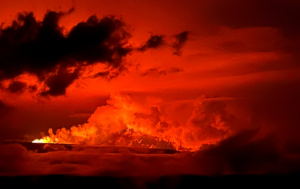
Time for A Carbon Tax for Hawaii?
By James Mak and Erik Haites Hawaii’s constitution requires a Tax Review Commission (TRC) be appointed every five years to review the state’s tax/revenue system.
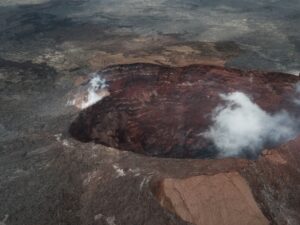
VOG – Using Volcanic Eruptions to Estimate the Impact of Pollutants on Learning Outcomes
By Rachel Inafuku. Joint research with Tim Halliday, Lester Lusher and Aureo de Paula. Introduction While an extensive number of studies have shown that pollution
Tourism water use during the COVID-19 shutdown: A natural experiment in Hawai‘i
By Nathan DeMaagd, Peter Fuleky, Kimberly Burnett, and Christopher Wada A recent study published in the Annals of Tourism Research used the shutdown of tourism
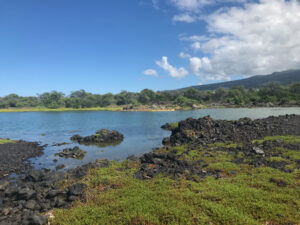
Social and Cultural values of Groundwater Dependent Ecosystems in Kona
By Veronica Gibson, Leah Bremer, Kimberly Burnett, Nicole Keakaonaaliʻi Lui, and Celia Smith “I think about the anchialine pools and the significance of the anchialine
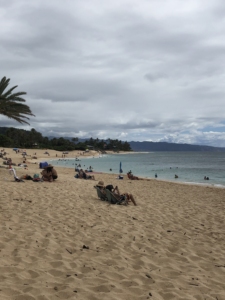
Managing for diverse coastal uses and values under sea level rise: perspectives from Oʻahu
By Leah Bremer, Makena Coffman, Alisha Summers, Lisa Kelley, and Billy Kinney “That whole experience of bonding, the family, the fresh air, that’s so critical.

Private Actions to Combat Climate Change Through Offsetting: The Story of The Coconut Traveler
By Kimberly Burnett, James Mak and Christopher Wada In late 2021, the United Nations (UN) held its 26th climate change conference (COP26) in Glasgow, Scotland.
Charging Visitors to Access Hawaii’s State Parks and Natural Recreation Areas
By Kimberly Burnett, James Mak and Christopher Wada Senate Bill S.B. 3192 S.D.2 in the current (2022) legislative session proposes to: “establish a visitor impact
Should Hawaii Levy a Visitor Green Fee to Protect Our Environment?
By James Mak Since the visitor to the Islands unquestionablycontributes significantly to the State’senvironmental problems, he will no doubthave to bear a substantial portion of
The Rising Cost of Climate Change on Home Values
By Justin Tyndall Climate change poses a clear threat to coastal real estate assets. As sea level rises and coastal weather events become more severe,